

Data Maturity Model for Small and Medium-Sized Businesses
Three journeys, run in parallel

Data maturity describes how effectively your business turns data into decisions. I assess it across three journeys that run in parallel:
Systems
Analysis
Governance
Let’s look at each in turn.
Data Systems Maturity
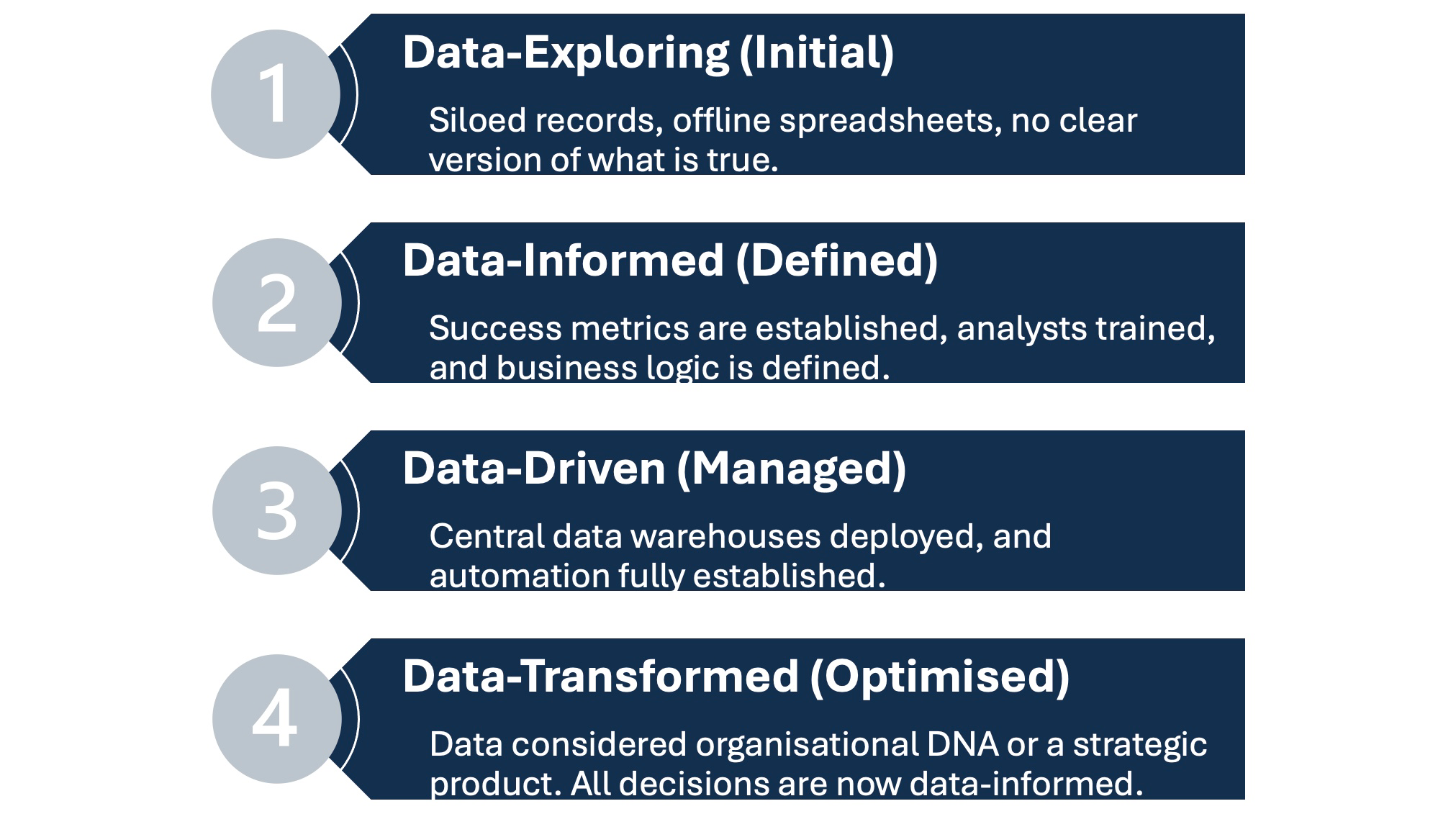
Teams will naturally start to produce reports to communicate performance and productivity. Eventually these reports are used across the business, which is when differences in calculations are found and duplication of work becomes apparent.
This is the ideal stage to bring in a Business Intelligence or data specialist to take you to the next stage of data systems maturity.
Data Analysis Maturity
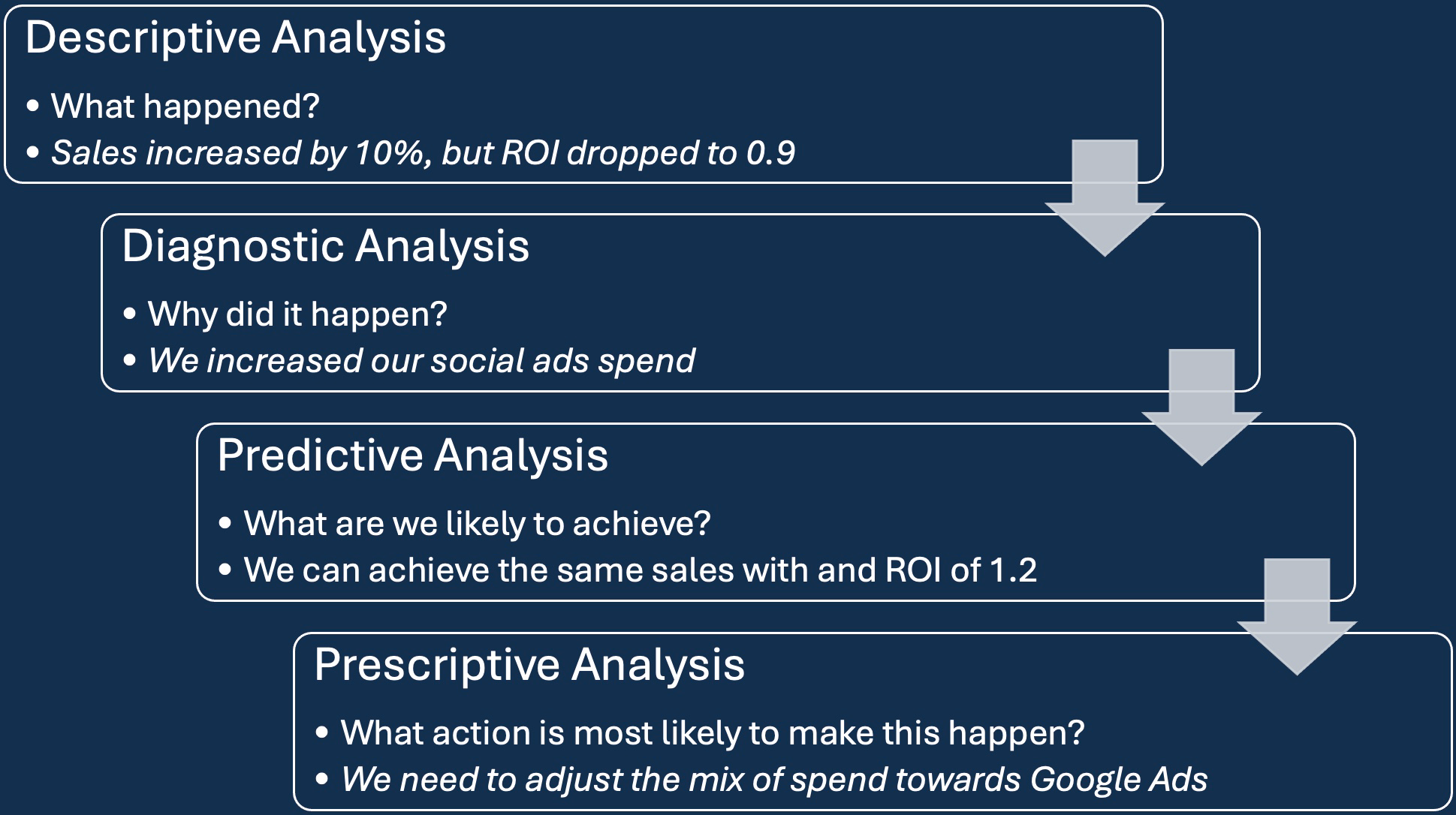
Questions of “what” will always evolve into “why”, but answering the “why” question to a high degree of certainty relies on three things:
More data
Data analysis expertise
Subject knowledge
Whilst you will have a lot of subject knowledge, you may well be struggling to gather and manipulate the data required for you to apply your knowledge.
Let me work with you so that you can effectively apply the knowledge you have.
Data Governance Maturity
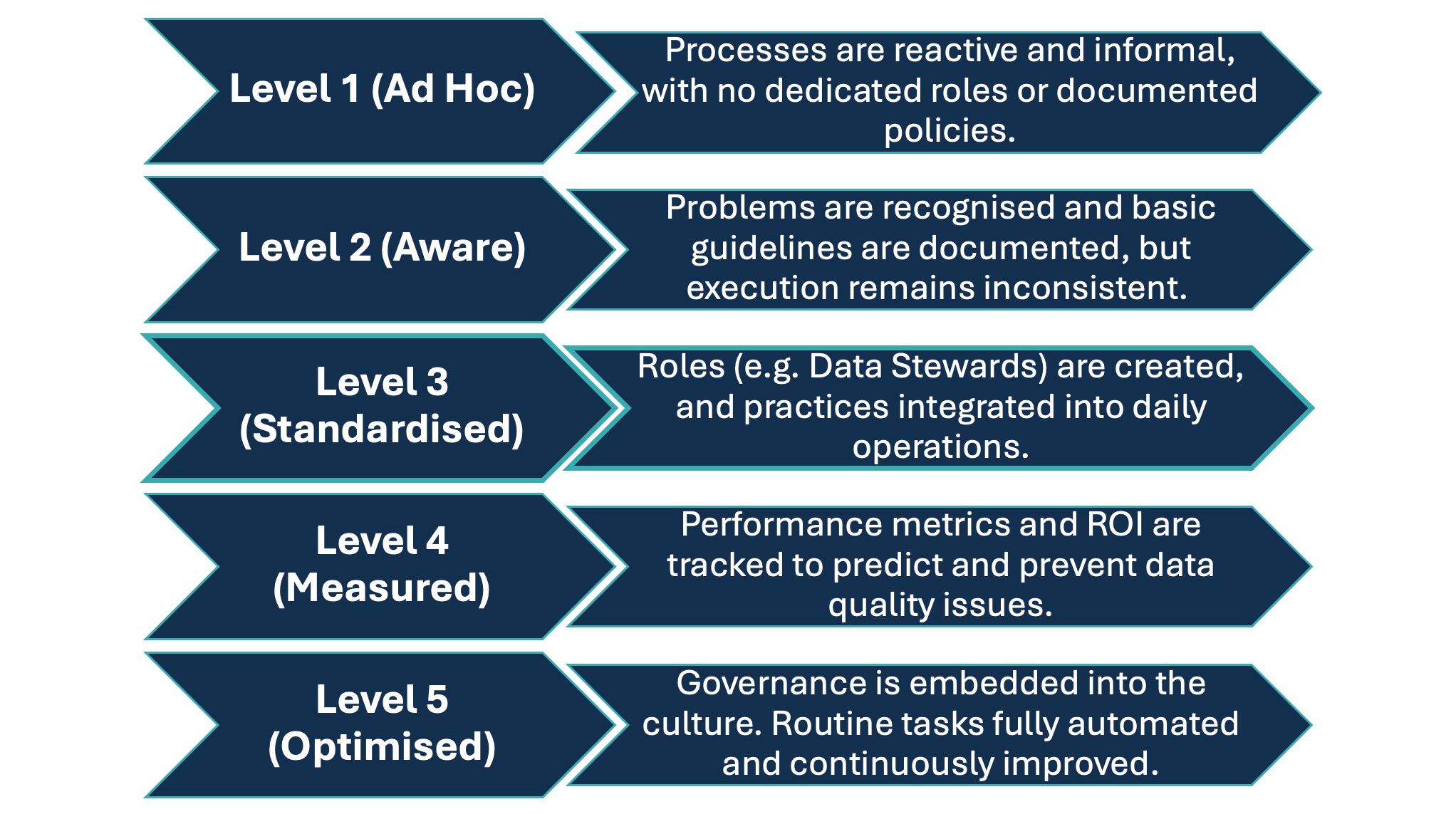
Data Governance is generally the last area to be considered. This is because the issues that arise from poor data governance are often hidden in the time it takes to analyse data, and they only become glaringly obvious as the business scales.
I think Level 3 is the sweet spot that all businesses should strive for because, at this stage, you begin to see real time savings when analysing information; and data is more trusted. If you’re interested in these benefits then reach out so I can take your business on this journey.